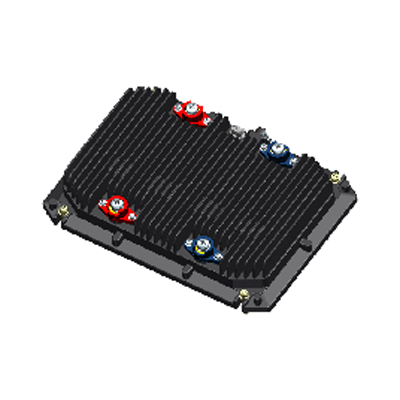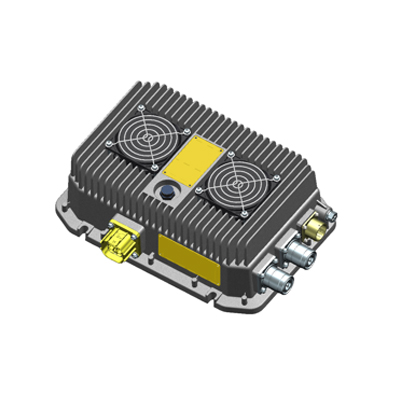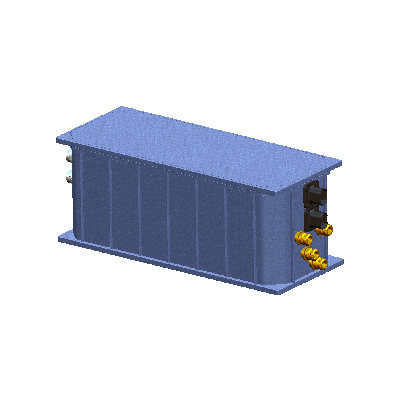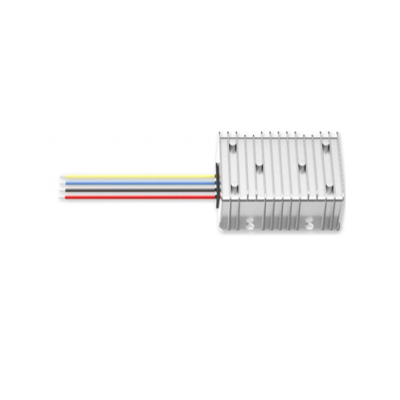
Overview — the auxiliary tier of the new-energy power-conversion family
The Youlai new-energy power-conversion family covers four roles on a modern electric commercial vehicle, layered by power scale:
- Heavy-duty tier — EBX-2314 HV-DCDC controller (36 kW HV→24 V) · EBX-2514 HV-DCAC inverter (30 kW HV→220 VAC VTL)
- Mid-duty tier — EBX-2512 integrated 6 kW HV-DCDC
- 24V→12V main tier — EBX-2407 dual-battery equaliser (24V→12V step-down + cell balancing, 100A / 30A SKUs)
- Auxiliary tier — the EBX-2515, this product — an isolated 12 V supply for an independent 12 V sub-system
The auxiliary tier solves a problem that the main 24V→12V tier does not address: galvanic isolation. The EBX-2407 dual-battery equaliser is a high-current non-isolated step-down that supplies the main 12 V auxiliary bus shared with the rest of the vehicle — cabin radio, dash-cam, telematics, lighting, USB charging. Any 12 V load that draws from the EBX-2407 output shares the same ground reference as the vehicle 24 V system; any common-mode noise on the 24 V system propagates straight onto the 12 V supply. For most 12 V loads that is fine. But for sensitive sub-systems — an independent 12 V data-acquisition cluster doing high-resolution analog measurement, a precision instrument that needs a clean ground reference, an independent 12 V CAN node that needs to be floated against the main vehicle network, a process-control sub-system in an industrial deployment — the shared-ground arrangement injects measurable noise into the measurement loop.
The EBX-2515 inserts a 1000 VDC galvanic isolation barrier between the input side and the output side. The primary side connects to the 24 V auxiliary bus (or the 12 V or 30 V variants across the 9-36 V input window); the secondary side delivers a clean regulated 12 V / 15 A that has its own ground reference, isolated from the input ground by the 1000 V barrier. Common-mode noise on the input ground does not reach the secondary side; the secondary side can be floated against the rest of the vehicle electrical system for sensitive measurement work; the input side can suffer a transient ground fault without dragging the secondary side down with it.
Engineering details
1000 VDC primary-to-secondary galvanic isolation
The 1000 VDC isolation barrier is the headline feature. The barrier is achieved through a transformer-coupled topology: the input-side switching stage drives a high-frequency transformer (operating at the 100 kHz switching frequency), the secondary side rectifies and regulates the output, and the only coupling between primary and secondary is the magnetic-flux path through the transformer core. There is no electrical conductor that crosses the barrier — even on a worst-case primary-side fault, the secondary side stays isolated.
Wide 9-36 VDC input window
The wide input window covers three nominal supply voltages with one SKU:
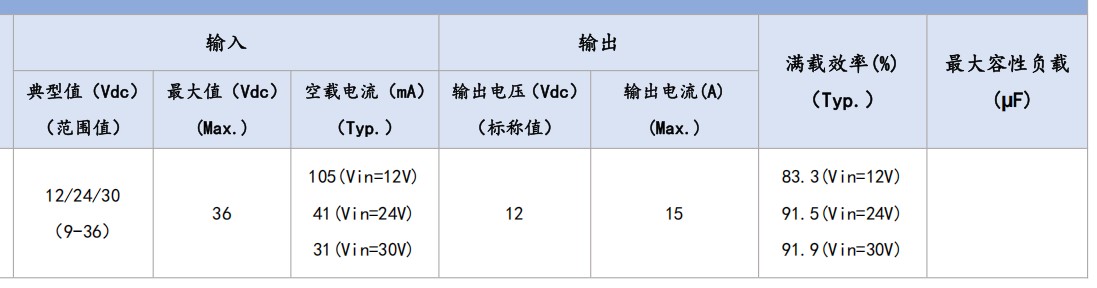
- 12 V class (Vin around 12 V) — light commercial vehicles, passenger-car derivatives, agricultural machinery; conversion efficiency 83.3 % typical at this corner
- 24 V class (Vin around 24 V) — the typical commercial-vehicle operating point; conversion efficiency 91.5 % typical, very close to the module's peak efficiency
- 30 V class (Vin around 30 V) — the upper end of the 24 V class working window when the alternator / DCDC is in top-of-charge state; conversion efficiency 91.9 % typical, the module's highest-efficiency operating point
Across the rated input window the peak efficiency reaches 92.2 %. The wide input window also gives the OEM the freedom to use the same SKU across multiple platform programmes — one inventory line, one approval cycle, one supplier qualification effort.
Built-in protection envelope
The protection state machine covers all four classes of failure mode on a DCDC module:
- Under-voltage — the input side reaching the under-voltage threshold disables the switching stage to avoid running the regulator in an indeterminate state; the module auto-recovers when the input returns to the working window
- Over-current — the output current is clamped at the 17 A limit; sustained over-current trips the output
- Output short-circuit — an output-side short triggers the protection state machine within microseconds; the module attempts a hiccup-mode restart at a low duty cycle, and auto-recovers when the short is cleared
- Over-temperature — internal body temperature reaching 110 °C trips the output; auto-recovery on cool-down to a safe threshold
Die-cast aluminium + organic-silica-gel potting + IP67
The mechanical construction is built for rugged deployment. The die-cast aluminium-alloy housing gives the module a metal-grade structural envelope and the primary thermal-shed path (heat is conducted from the internal PCBA through the potting compound to the aluminium walls and then to ambient via natural convection over the fin surface). The organic-silica-gel potting bonds the PCBA to the housing for both thermal conduction (fast natural-convection heat-shed without needing external cooling) and mechanical-shock damping (the potting damps the resonance modes of the PCBA against the long-vibration commercial-vehicle profile). IP67 ingress rating — dust-tight and water-tight to 1 m / 30 min immersion, suitable for under-dash, chassis-side or industrial-cabinet placement.
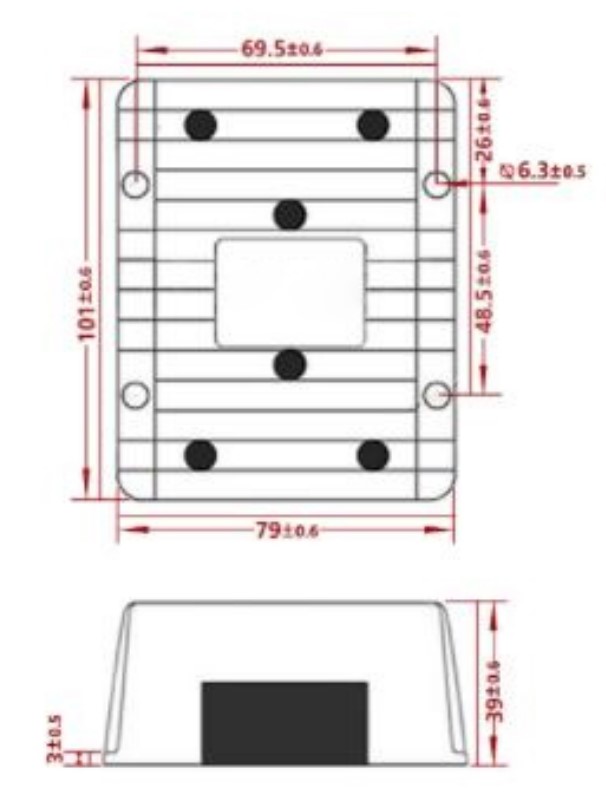
Mechanical drawing — top + side views
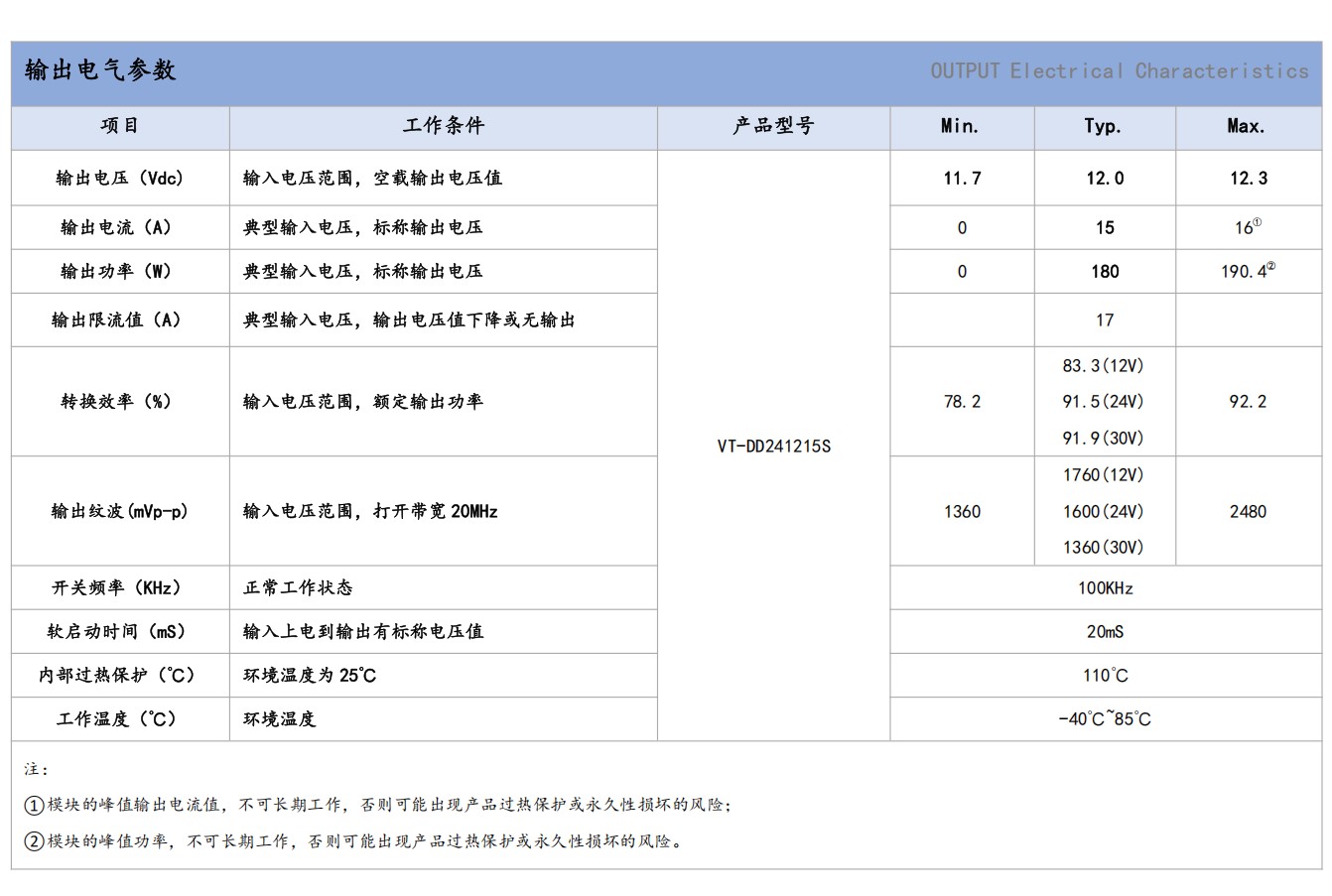
Output electrical characteristics reference
Input efficiency reference
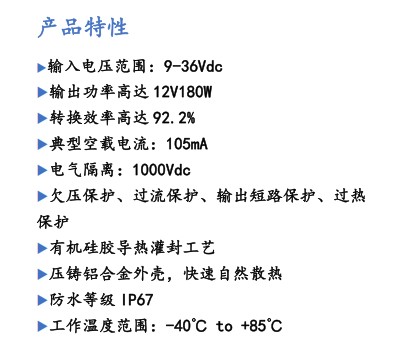
Headline feature list
Comparison with the related Youlai 12 V supply modules
| Model | Input | Output | Isolation | Function | Typical use |
|---|---|---|---|---|---|
| EBX-2515 | 9-36 VDC (wide) | 12 V / 15 A / 180 W | 1000 VDC galvanic | Isolated step-down for an independent 12 V sub-system | Sensitive sensor / DAQ / industrial sub-system |
| EBX-2407 | 16-32 VDC (24V series-stack) | 12 V / 100A or 30A SKU | Non-isolated | Main 24V→12V supply + dual-battery cell balancing | Main 12 V auxiliary bus on a 24 V vehicle |
The EBX-2515 is the right choice when an independent 12 V sub-system on a 24 V vehicle (or any deployment that needs an isolated 12 V rail from a wide-input DC source) needs a clean isolated supply with up to 180 W of regulated output, decoupled by 1000 V from the main vehicle electrical ground. For the high-current non-isolated main 24V→12V supply (with built-in dual-battery balancing) for the whole vehicle 12 V auxiliary bus, look at EBX-2407.
Manufacturing & testing
Built under IATF 16949 with APQP project planning and a PPAP package available for OEM programmes. Every unit is end-of-line functional-tested before packaging — the input voltage range across the 9-36 VDC envelope at the three reference operating points (12 V / 24 V / 30 V), the 12 V output voltage regulation across the input window (11.7 - 12.3 V envelope), the 15 A continuous output capability, the conversion efficiency measurement at each reference operating point, the 1000 VDC primary-to-secondary isolation withstand check, the output current limit at 17 A, the over-temperature trip at the 110 °C threshold, the output short-circuit hiccup-mode recovery, and the IP67 ingress baseline are all checked.
How to ask
The EBX-2515 belongs to the Smart Control Modules family. To request the harness drawing, the pigtail conductor length / colour-code / termination option, the OEM-side custom-output-voltage variant (12 V is standard, custom voltages negotiable on the VT-DD24xxxxS family), the mounting-bracket option or a PPAP package, use the contact page. These help if you already have them: target vehicle / industrial programme, expected annual volume and key technical requirements (input voltage class, output current need, isolation requirement, ambient-temperature window, mounting orientation, EMC profile, IP rating). Drawings welcome.