Overview
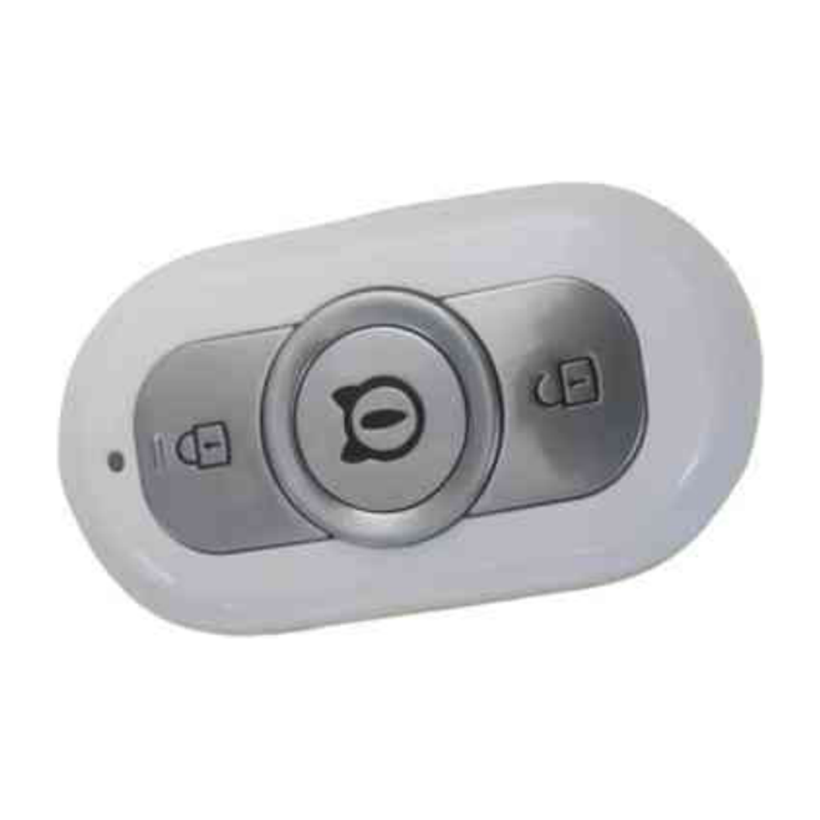
A remote key fob is the part of a keyless system the driver actually holds. The YDK-2401 is Youlai's RKE (remote keyless entry) fob: press lock, unlock or find-car and it sends a coded command on 433.92 MHz to a receiver in the vehicle, which acts on it. It is a button remote rather than a passive smart-key, so what matters on its datasheet is a clean transmit, buttons that survive years of daily use, and a housing that copes with life on a keyring.
Because it is the hand-held end of the system, the specifications worth reading are the ones a driver notices — how far it reaches, how many presses the buttons take, and how it handles cold, heat and the odd splash.
The three buttons
The YDK-2401 carries three functions — lock, unlock and find-car — each rated to 60,000 press cycles. On a fleet cab locked and unlocked several times a shift those cycles add up quickly, so the button rating is worth checking against your duty. Find-car is the command drivers ask for by name: a press that prompts the vehicle to signal its position, useful for picking one cab out of a crowded yard or depot.
Range and the RF link
The transmit frequency is 433.92 MHz and the open-air range is 15 m. Treat that as a best case: metal bodywork, a cab full of other electronics, a crowded RF band and an ageing fob battery all pull real range down. When you plan a build, place the receiver antenna for the worst realistic case — a driver approaching from behind a steel body — rather than the open-field number. The link is one-way, so the fob transmits and the vehicle receiver decides what to do; the pairing and coding between the two are set by the receiver, which is why they are confirmed per programme.
Built to live on a keyring
A fob lives in a pocket, on a keyring and often on a dashboard in the sun, so its ratings are about everyday handling rather than the engine bay. The YDK-2401 is sealed to IP54 — dust-protected and protected against splashing water (not immersion) — and qualified from −30 to +80 °C working, −40 to +85 °C storage. The housing is flame-rated to UL94 V-0, materials meet the GB/T 30512-2014 banned-substance spec and RoHS, and the mouldings are held free of flash, burr and cracks. Unspecified dimensions follow GB/T 1804-M so the part stays consistent batch to batch.
Where it fits in a keyless system
RKE, PKE and PEPS are three levels of one idea. RKE — remote keyless entry — is the button fob: the driver presses lock or unlock and the vehicle acts. PKE (passive entry) adds a 125 kHz challenge so a door opens with the key still pocketed, and PEPS adds push-to-start. The YDK-2401 is the RKE layer. Passive entry and push-to-start rely on a two-way smart-key that answers the 125 kHz challenge — a different device from this button remote — so the YDK-2401 is specified where remote lock / unlock / find-car is the requirement.
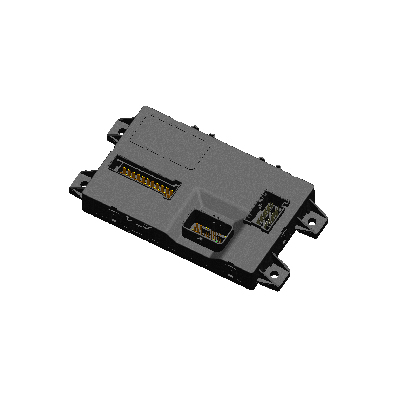
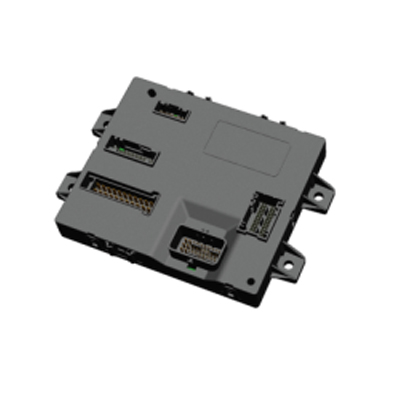
Its 433.92 MHz signal is read by an RKE receiver, which is often built into the body controller rather than sitting in a separate box — the EBX-2305 BCM, for example, carries a 433.92 MHz RKE receiver on board. Which receiver reads it, and the coding and pairing between the two, are matched to your programme. For how RKE, PKE and full PEPS differ and where each belongs, the PEPS keyless-entry guide walks through the architecture.
What we set with you at RFQ
A fob is matched to a market and a receiver, so a few details are confirmed with you at quotation:
- destination market, which fixes the radio type approval the 433.92 MHz path must carry;
- the receiver or BCM it pairs with, and its coding / pairing protocol (including whether you need rolling-code security);
- button legend, housing colour and finish, and any branding;
- whether a mechanical key blade or immobiliser transponder is needed in the body;
- battery type and expected service life;
- expected annual volume.
Sending these up front means the quote and first samples are matched to your receiver and market rather than a generic setup, saving a round of back-and-forth.
Manufacturing & testing
The fob is built under IATF 16949 with APQP project planning, and a PPAP package is available on programme handover. End-of-line checks and sample-based button-endurance and environmental validation run to the control plan agreed for each programme. Where a design needs fresh validation, RF and environmental pre-compliance screening runs in our in-house lab, with formal radio type approval handled at accredited third-party laboratories for the destination market.
Common questions
Is it a one-way RKE fob or does it do passive entry? It is an RKE button fob — it transmits lock, unlock and find-car on 433.92 MHz to an RKE receiver in the vehicle, often built into the BCM. Passive entry (PKE) and push-to-start (PEPS) use a two-way smart-key that answers a 125 kHz challenge — a different device — and the receiver and coding are matched per programme.
What is the range? 15 m in open air; shorter around metal, in busy RF, or as the battery ages, so plan the antenna for the worst case.
What buttons does it have, and how durable? Lock, unlock and find-car, each rated to 60,000 press cycles, from a nominal 3 V.
What temperature and protection rating? −30 to +80 °C working, −40 to +85 °C storage, sealed to IP54 and flame-rated UL94 V-0.
What do you need to quote it? Destination market, the receiver/BCM and its pairing protocol, button legend and housing, any key blade or transponder, battery type, and annual volume. Samples and drawings welcome.
How to ask
The YDK-2401 sits in the Switches & Sensors family and is normally specified into a keyless-entry build together with the RKE receiver or BCM that reads it. To move on the part itself, use the contact page — we typically reply within one business day.