Overview
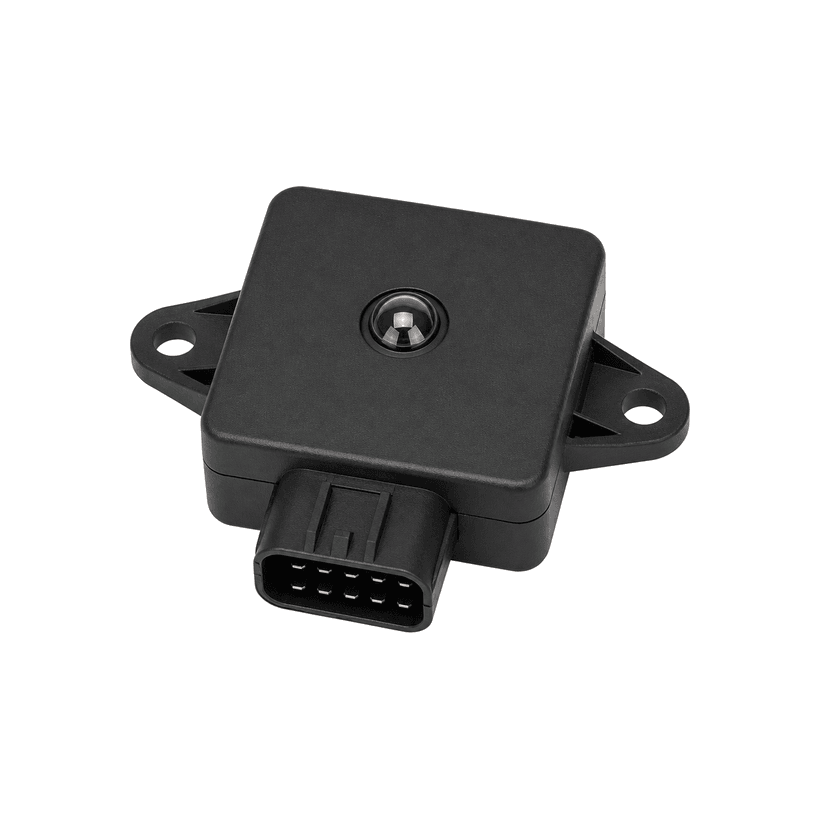
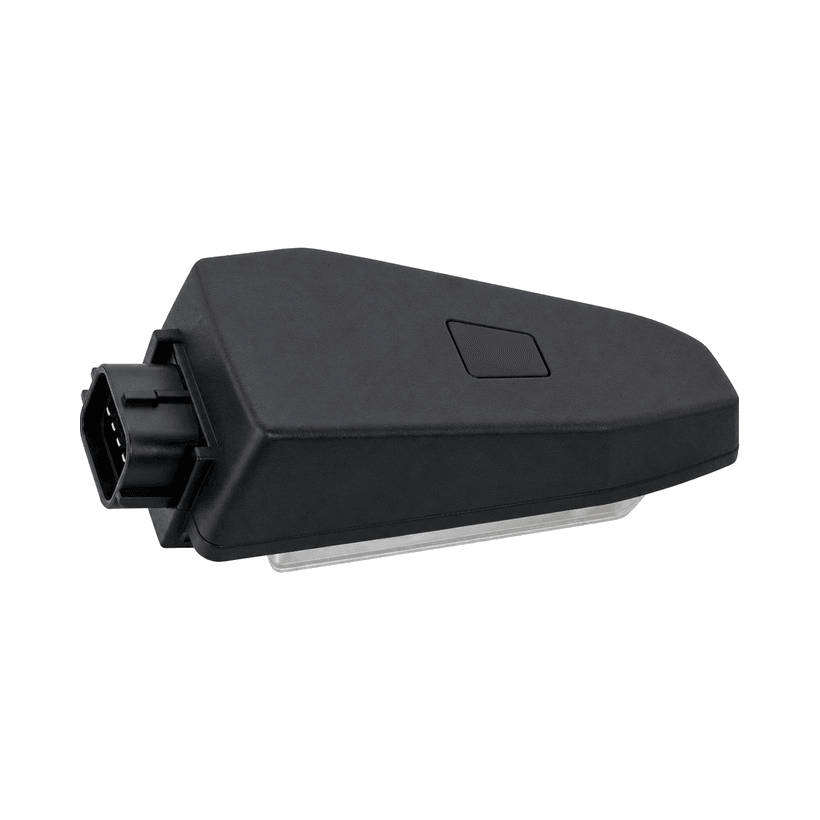
The CGQ-024A is the input a cab uses to run its wipers and lighting automatically. It bonds to the inside of the windscreen, behind the mirror mount where the driver's view is unaffected, and looks out through the glass with two sensing channels: an ambient-light reading and a rain-on-glass reading. The vehicle uses the light channel to switch the headlamps at dusk, in tunnels or under heavy cloud, and the rain channel to trigger the wipers and set their speed as the rainfall changes. Because it reads rain directly at the glass, the driver no longer has to reach for the wiper stalk every time a shower starts or stops.
It is developed for a 12 V vehicle system and comes in two variants: the 024A-SYN for a 9 – 16 V supply and the 024A-LUX for a wide 9 – 32 V range, which suits mixed 12 / 24 V fleets. Both share the same windscreen-bonded body and sensing principle.
What it senses
- Ambient light. How much daylight is reaching the cabin, used for the automatic headlamp strategy — dusk, tunnels and heavy overcast — the same lighting logic a dedicated sun-load sensor serves, but read from the windscreen line.
- Rain on the glass. An optical reading of water sitting on the outer surface directly in front of the sensor. The wiper controller uses it to start the wipers when rain begins, raise the sweep rate as it intensifies, and stop when the glass clears — the core of an automatic-wiper feature.
The two channels are read by a wiper and lighting controller such as the EBX-961, which owns the decisions; the CGQ-024A is a sensing input, not a controller, and it does not drive the wiper motor or the lamps itself.
How it mounts on the windscreen
Rain sensing only works when the sensor is optically coupled to the glass, so mounting is part of the specification rather than an afterthought. The CGQ-024A bonds to the inner face of the windscreen with 3M adhesive at a defined position, and the glass across the sensing patch must be 3 – 7 mm thick and kept clear of anything that blocks light transmission there — a static-shielding film, a solar-reflective coating or a shade band will scatter or absorb the light and distort the reading. An opaque mask around the sensing aperture stops refracted stray light entering from the side, reaching the optics and biasing the result. Getting these three things right — glass spec, adhesive position and aperture masking — is what separates a rain sensor that tracks the weather from one that chatters or misses light showers.
Electrical and environmental
The CGQ-024A runs on a 12 V system. The 024A-SYN variant covers a 9 – 16 V supply for a straight 12 V cab, while the 024A-LUX variant widens the input to 9 – 32 V so the same part number can be carried across a mixed 12 / 24 V fleet. The working range is −40 to +85 °C with storage from −40 to +95 °C, covering a windscreen that cold-soaks overnight and one that bakes behind glass in summer sun. Sealing is IP54, appropriate for a sensor bonded to the cabin side of the windscreen. Before shipment the 3M adhesive pads are applied to the fixed positions shown on the assembly drawing, and each unit is fit-checked against that drawing so the coupling geometry is correct on arrival.
Choosing: light-and-rain vs sun-load
Youlai builds two related cabin light sensors, and the split is about what the cab automates. The CGQ-024A is the light-and-rain sensor: it adds a rain-detection channel to the light reading and bonds to the windscreen, so it is the part to specify when a programme wants automatic wipers as well as automatic headlamps.
Where the cab only needs automatic lighting and climate solar-compensation — no rain-sensing wipers — the CGQ-012A ambient light and sun-load sensor is the simpler choice: it reads sunlight and temperature from a dash-top position and runs on a 24 V system, without the windscreen-bonding constraints. In short: pick the CGQ-024A for rain-sensing wipers (12 V, or a 24 V cab on the wide-input 024A-LUX), and the CGQ-012A for sun-load lighting and HVAC when the cab has no rain wipers. A related image-only 024B variant exists for legacy programmes; ask if you have a drawing that calls it out. All are quoted through the same OEM workflow — share your automation targets (automatic headlamps, automatic wipers, climate solar-compensation) and we map them to the right sensor. For the full sensor line, see how we work as a commercial vehicle sensor manufacturer.
Manufacturing and testing
Built under IATF 16949 with APQP project planning and a PPAP package available for OEM programmes. End-of-line testing checks the light and rain channels against reference points and confirms the connector and adhesive-position geometry before packaging. EMC and temperature validation is run on a sample basis in our in-house lab when a programme requires fresh data.
How to ask
The CGQ-024A belongs to the Switches & Sensors family. If your cab only needs auto-lighting and climate solar-compensation rather than rain-sensing wipers, look at the CGQ-012A sun-load sensor; for the wider sensor programme — TPMS, rain-light and fuel-level — talk to us as your commercial vehicle sensor manufacturer, and the rain and light sensor buyer guide explains how automatic wipers and headlamps use these sensors. To request the output behaviour, the connector pinout, the windscreen mounting spec or a fleet-grade configuration, please use the contact page with your target vehicle programme, expected annual volume, and key requirements (12 / 24 V system, windscreen glass spec, auto-wiper / auto-lighting targets, connector preference). Drawings welcome.