Overview
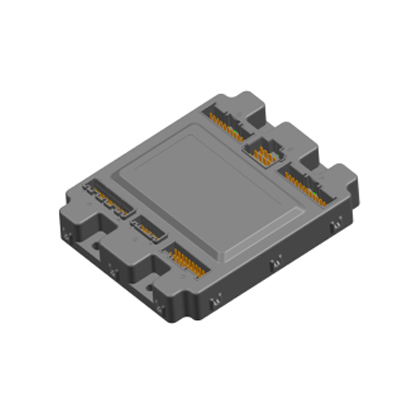
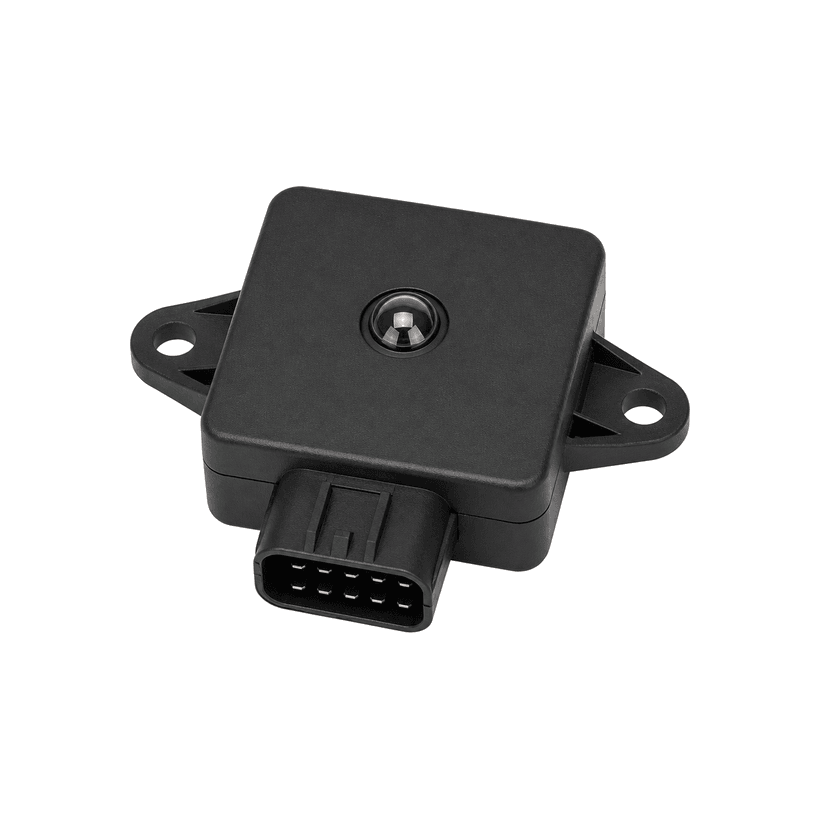
The CGQ-012A is the light-and-temperature input a cab uses to run its lighting and climate automatically. It sits high in the cabin — on the dashboard top or along the windscreen line — where it has a clear view of the sky, and it continuously measures two things: how much sunlight is reaching the cabin (sun-load) and the local temperature. Both are handed to the body control module as analogue signals. From there the BCM decides when to switch the headlamps on at dusk or in a tunnel, and the climate system uses the sun-load reading to correct cabin cooling for a vehicle standing in direct sun.
Electrically it is a low-level analogue sensor developed for a 24 V vehicle system, drawing its reference from a 4.5 – 5.5 V supply. It is a passive input device: it reports a signal, it does not drive any lamp or motor itself.
What it senses
- Sun-load (light intensity). The primary signal — how strongly sunlight is falling on the cabin — used for the automatic headlamp strategy (dusk, tunnels, heavy overcast) and for the climate system's solar-compensation term.
- Temperature. A local temperature reading that travels with the light signal, used by the climate controller alongside sun-load so the cabin target holds steady as the vehicle moves between direct sun and shade.
Both are analogue low-level outputs read directly by the BCM's analogue inputs, rather than a bus message the sensor puts on CAN.
Where it fits: automatic lighting and climate
On a commercial vehicle the CGQ-012A is a BCM input, not a stand-alone controller. The BCM — for example the Youlai EBX-954 heavy-truck BCM — reads the sun-load and temperature signals and turns them into decisions: switch the low beams and marker lamps automatically, hand a solar-load term to the HVAC controller, and, on cabs that use a dedicated lighting control module, coordinate the exterior-lighting outputs. Because the sensor's job is to see the sky, mounting position matters: it goes where nothing shadows the sensing window — the top of the dash or the upper windscreen — and the surrounding trim is finished so stray reflections do not bias the reading.
Electrical and environmental
The CGQ-012A runs from a 4.5 – 5.5 V sensor supply inside a 24 V vehicle system and tolerates reverse voltage to 30 V, so a mis-wired harness during assembly does not destroy the part. The working range is −30 to +85 °C, with storage from −40 to +90 °C — covering cabs that cold-soak overnight in a winter depot and those baking in direct summer sun, which is the exact duty a sun-load sensor sees. Sealing is IP53, appropriate for an interior dash-top position rather than an exposed exterior one. The design follows the industry EMC standard and QC/T 413-2002 with the U201 sunlight-environment sensor technical conditions; unspecified plastic-part tolerances follow SJ/T 10628-1995 grade 7. The mating connector is the Yazaki 7283-8660 / 7116-1670-02 pair.
Choosing across the light and rain sensor family
Youlai builds two related families of cabin light sensors, and the split is about what the cab automates. The CGQ-012A is the sun-load sensor: it measures sunlight and temperature for automatic headlamps and climate solar-compensation, and it is the part to specify when a programme needs lighting and HVAC automation from a dash-top position.
Where the cab also automates the wipers, the CGQ-024A light-and-rain sensor (with a related image-only 024B variant) adds a rain-detection channel to the light measurement. It bonds to the windscreen glass (3 – 7 mm, with the sensing patch kept clear of any film or coating that would block light transmission) and runs from a 12 V supply, so it suits a rain-sensing wiper strategy rather than a dash-top sun-load reading. All are quoted through the same OEM workflow; if you are not sure which channel set a programme needs, share the automation targets — automatic headlamps, automatic wipers, climate solar-compensation — and we map them to the right sensor. For the full sensor line, including TPMS and fuel-level, see how we work as a commercial vehicle sensor manufacturer.
Manufacturing and testing
Built under IATF 16949 with APQP project planning and a PPAP package available for OEM programmes. End-of-line testing checks the light and temperature output against reference points and confirms reverse-voltage tolerance and connector integrity before packaging. EMC and temperature validation is run on a sample basis in our in-house lab when a programme requires fresh data.
How to ask
The CGQ-012A belongs to the Switches & Sensors family. If your cab also needs rain-sensing wipers, see the CGQ-024A light-and-rain sensor; for the wider sensor programme — TPMS, rain-light and fuel-level — talk to us as your commercial vehicle sensor manufacturer, and the rain and light sensor buyer guide explains how automatic wipers and headlamps use these sensors. To request the output curve, the connector pinout or a fleet-grade configuration, please use the contact page with your target vehicle programme, expected annual volume, and key requirements (24 V system, mounting position, auto-lighting / climate targets, connector preference). Drawings welcome.