Overview
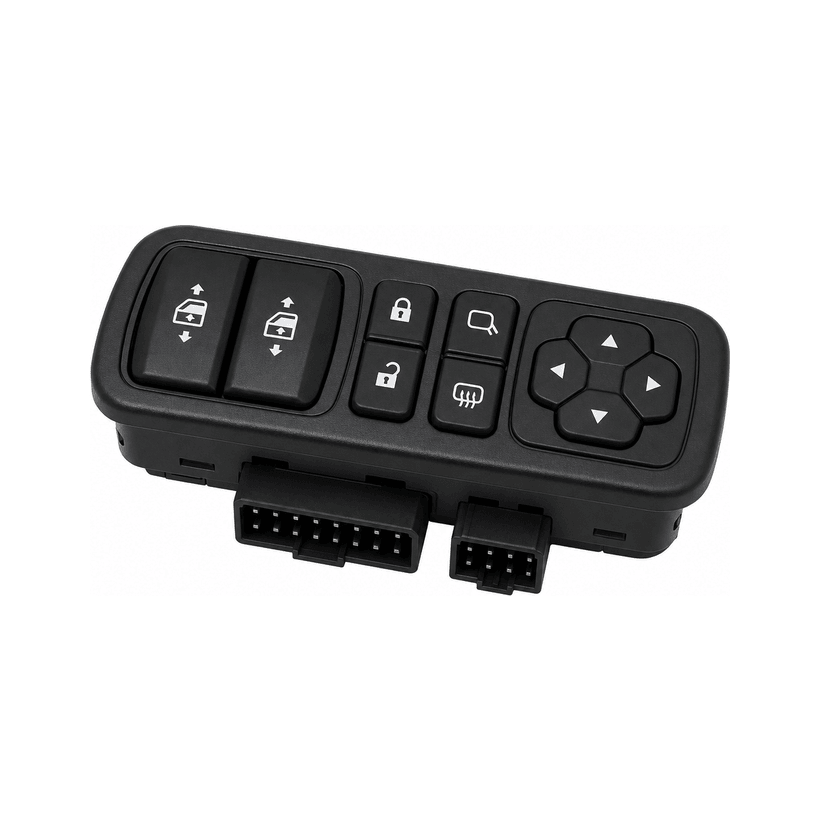
The EDK-914 is the window switch on a cab door. It gives the driver and passengers the raise-and-lower control at the armrest and, where the layout calls for it, the central-lock key as well. It is a LIN-bus part: alongside the window keys it runs a LIN data line, so the door can sit on the cab's low-speed network instead of pulling a separate wire home for every function. Staying focused on windows and central lock keeps it the simpler member of the door-switch family — it leaves the mirror-adjust and mirror-heat functions to the fuller EDK-908 door & window control switch.
Windows, central lock and a LIN data line
Each key commands its window up or down; a central-lock key locks and unlocks the doors on the switch the layout puts it on. The switch coordinates over a LIN line — the low-speed automotive network that suits door functions, where the traffic is light and the loads are local to the door. Its datasheet centres on the switching functions and the LIN interface rather than a headline motor-current rating, so the drive path — whether the window motor is switched on the EDK-914's own outputs or commanded through a door / body module — is set per programme against the harness. That is the door-side pattern described in the switches & sensors technical guide: interior window and lock switching runs on short outputs and a low-speed bus off a body-adjacent controller.
Single- and dual-button variants
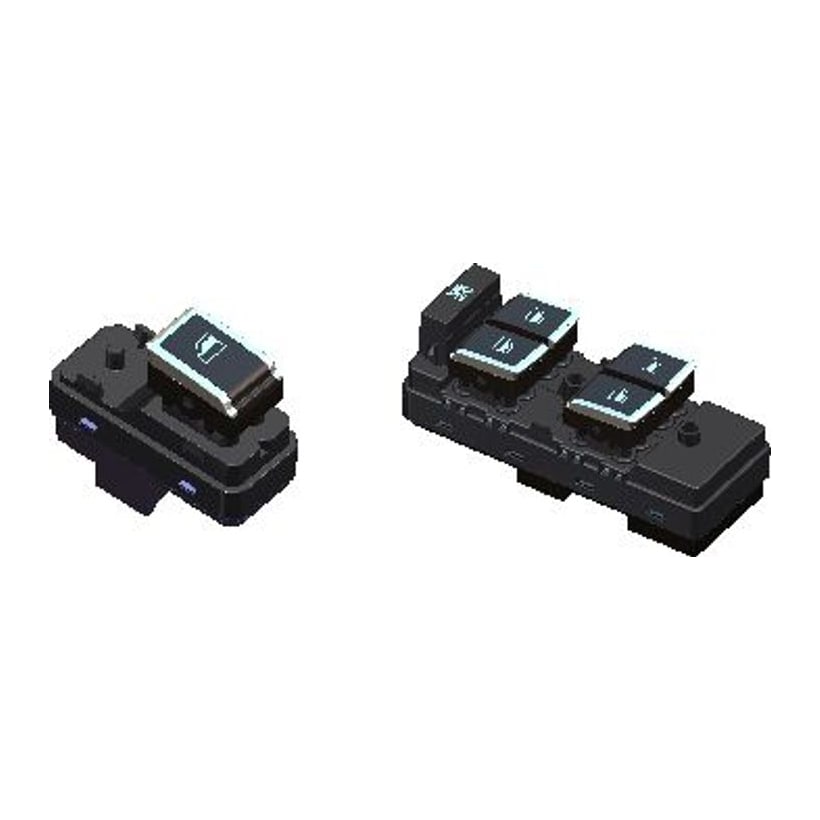
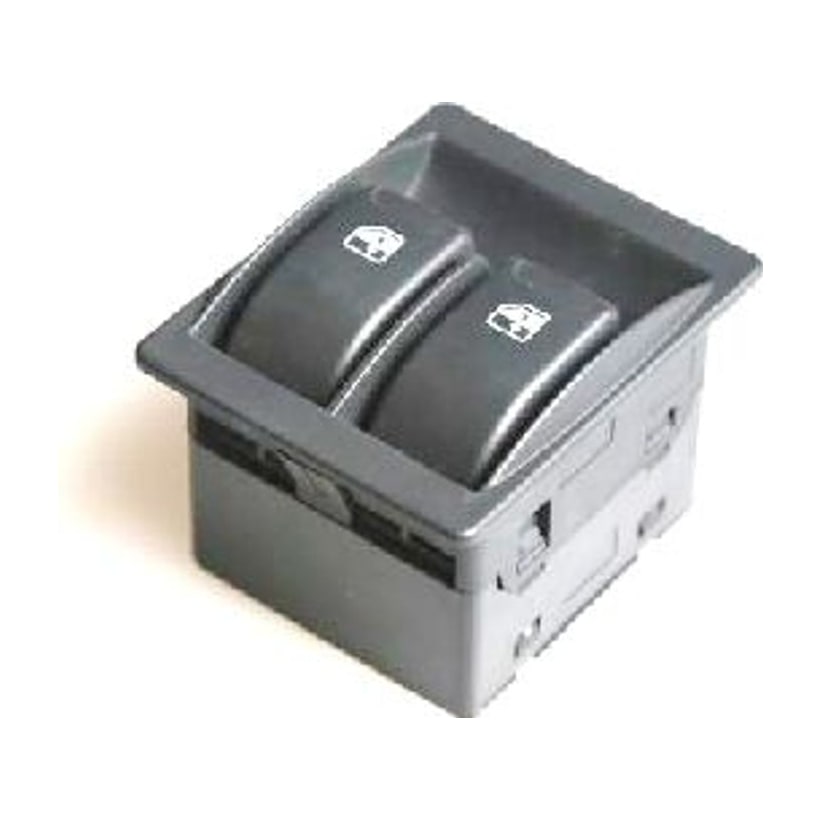
The EDK-914 is offered in more than one key count so a cab can be fitted door by door. A single-button switch handles one window; a dual-button switch handles two. Central lock is added on the door switch the layout puts it on — usually the driver door. Send the door and window plan and we confirm the button count and the legend for each position.
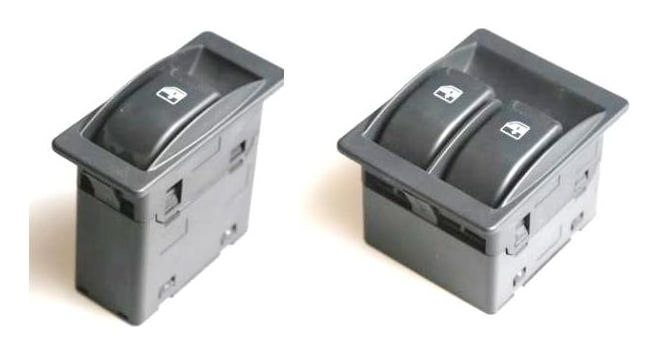
Where it sits: EDK-914, EDK-908 and TDK-2202
Three parts in the range cover window and door switching, and which one fits depends on system voltage and how much the one panel has to do:
- EDK-914 — LIN power-window switch, 18–32 V. Window up/down and central-lock switching plus a LIN data line, in single- and dual-button variants at IP53. The focused choice when a door only needs its windows and lock.
- EDK-908 — full door & window master, 18–32 V. Adds mirror adjust and mirror defrost, with motor over-temperature protection. Sealing is confirmed per programme — one panel for windows, locks and mirrors.
- TDK-2202/3 — 12 V passenger & new-energy. The car-voltage counterpart, driving the window motor directly at a 25 A carry rating with a LIN line for the doors.
On programmes that centralise door logic in a body module, the EDK-914 can sit alongside a door & window control module such as the EBX-2163 — the switch is the driver-facing input and the module owns the load and the door state. The interface between the two is confirmed against the harness drawing per programme. For the wider architecture decision — discrete switch, LIN module or body controller — see the power-window & door-control module article. To place the EDK-914 against the fuller EDK-908 master and the 12 V TDK-2202/2203 on the switch side, see the power-window & door switch panels buyer guide; for the interface decision behind it — LIN, hard-wire or CAN — see CAN vs LIN vs hard-wired switches.
Build, durability & manufacturing
A door switch is pressed every trip, so the tactile side is specified alongside the electrical. Key force is held to 5 ± 1.5 N over a 15° travel for a clean, positive press, and the mechanism is qualified to more than 50,000 operations. It works across a −30 to +85 °C cabin range with storage down to −40 °C, and carries IP53 — dust-protected and guarded against light water spray, suited to an interior door-panel mounting rather than a wash-down or exterior position. The build pairs ABS keycaps and a polycarbonate bezel with a silicone-rubber contact pad and a copper return spring — the parts behind the consistent feel and the operation count.
The switch is made under IATF 16949 with APQP planning and a PPAP package available for OEM programmes. End-of-line testing follows the control plan — typically contact make/break on each key, LIN communication and operating force against the 5 ± 1.5 N window — while endurance and temperature soak are validated on a sample basis in our in-house lab when a programme calls for fresh qualification.
Common questions from buyers
Does it drive the window motor directly, or command a module over LIN? It carries the window up/down and central-lock switching plus a LIN data line. The datasheet does not publish a window-motor current rating, so whether the motor is switched on the switch's own outputs or through a door / body module is confirmed per programme. Tell us the motor current and whether a door module is in the architecture, and we confirm the drive path and connector.
How is it different from the EDK-908? Both are 18–32 V LIN door switches. The EDK-908 is the fuller master — it adds mirror adjust and mirror defrost, with motor over-temperature protection, and its sealing is confirmed per programme. The EDK-914 stays on window up/down plus central lock, in single- and dual-button variants at IP53. Pick by whether the door also needs mirror control.
Single- or dual-button, and where does central lock go? The single switch handles one window, the dual-button two. Central lock sits on the door switch the layout calls for — usually the driver door. Send the door plan and we confirm the button count and legend per position.
What do you need to quote it and confirm the connector? The target vehicle or machine programme, the door and window plan (windows per door, where central lock sits), the system voltage, and whether a door / body module is in the LIN architecture. With that we confirm the variant per door, the connector and pinout, the button legend and the drive path, and return a drawing pack.
How to ask
The EDK-914 belongs to the Switches & Sensors family. Tell us the target vehicle programme, the door and window plan (windows per door, where central lock sits), and the system voltage and whether a door module is in the architecture — and we confirm the variant, the connector and pinout, and the legend set. Use the contact page; drawings welcome.