The selector
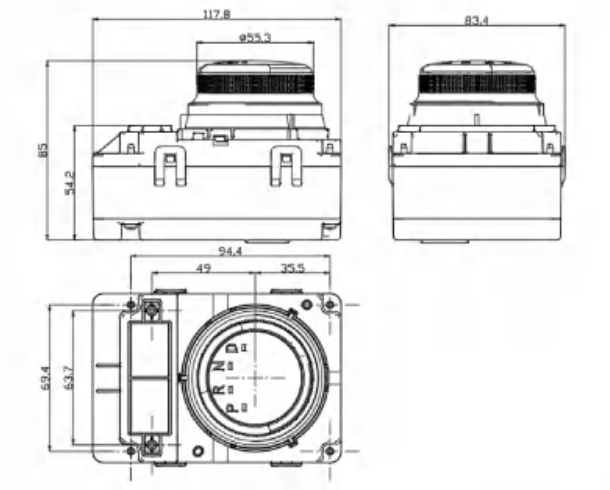
The EDK-916 is a square, panel-mount rotary selector: a black body, a blue ring and a knurled metal bezel, with R, N, D and S marked on the dial. Turning the knob selects the position. The selector indicates that position and can send it to external equipment so the outside display matches. Each position also has its own active-low output.
Operating torque is 0.15 N·m ± 0.05 N·m. Each step is 35° ± 2°. The mechanism is rated for 300,000 cycles. Working temperature is −40 to +85 °C, and storage is −40 to +90 °C. The published supply is 12 VDC.
N-position lock, sleep and wake
The published lock is on N, and it is a solenoid on this selector. Rotating into N while the brake input is inactive locks the solenoid. It releases only when the ignition (ON) input and the brake input are both active. If either input then drops and the selector is still in N, the solenoid locks again. If the selector has already left N, the solenoid stays released. While the position is N, the power-off N output (pin 2, active low) is on; in every other position that output is off.
Sleep follows the same two inputs. In N, the selector sleeps after ignition and brake have both been inactive for 2 seconds. In any other position, it sleeps after 15 seconds. Ignition and brake are the wake sources. The position indication turns off while the selector is asleep.
Connector and pinout
The harness side mates with TE 174045-2. The published 12-way assignment is:
| Pin | Function | Signal |
|---|---|---|
| 1 | Backlight supply | BACKLIGHT |
| 2 | Power-off N output (active low) | 2 |
| 3 | Brake input (active high) | CN_IN1 |
| 4 | Ignition (ON) input (active high) | ADC_1 |
| 5 | Unused | 5 |
| 6 | Supply | +12V |
| 7 | Reserved | 7 |
| 8 | S output (active low) | SW1 |
| 9 | R output (active low) | SW2 |
| 10 | N output (active low) | SW3 |
| 11 | D output (active low) | SW4 |
| 12 | Supply ground | GND |
Pins 2, 5 and 7 are printed with the pin number in the signal column. Pin 5 is unused and pin 7 is reserved. The four gear lines are active low: SW2 is R, SW3 is N, SW4 is D and SW1 is S.
What sits beside it
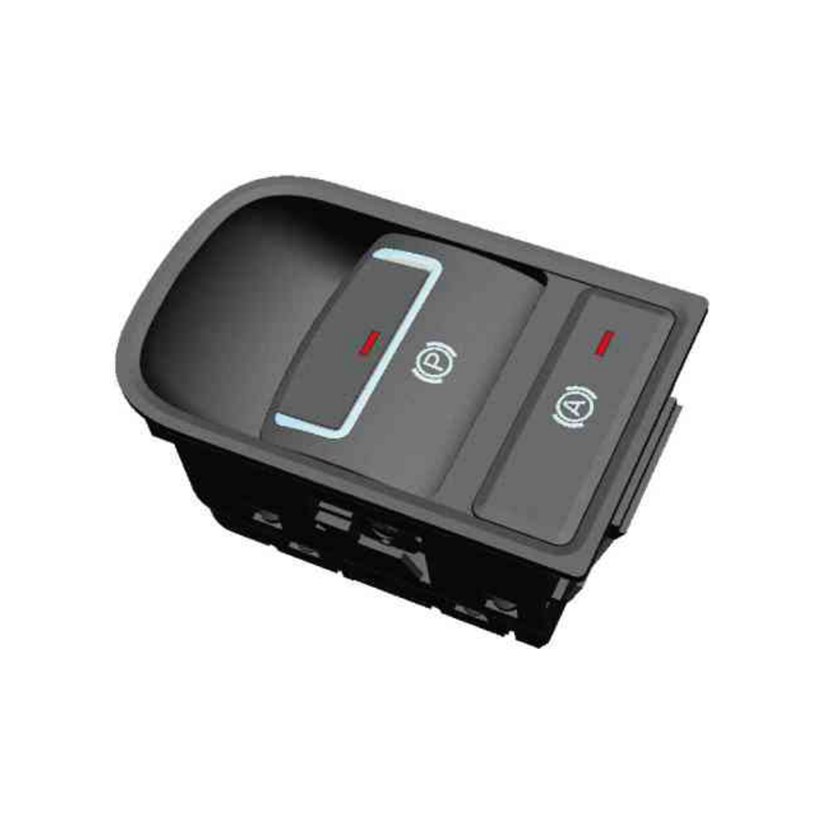
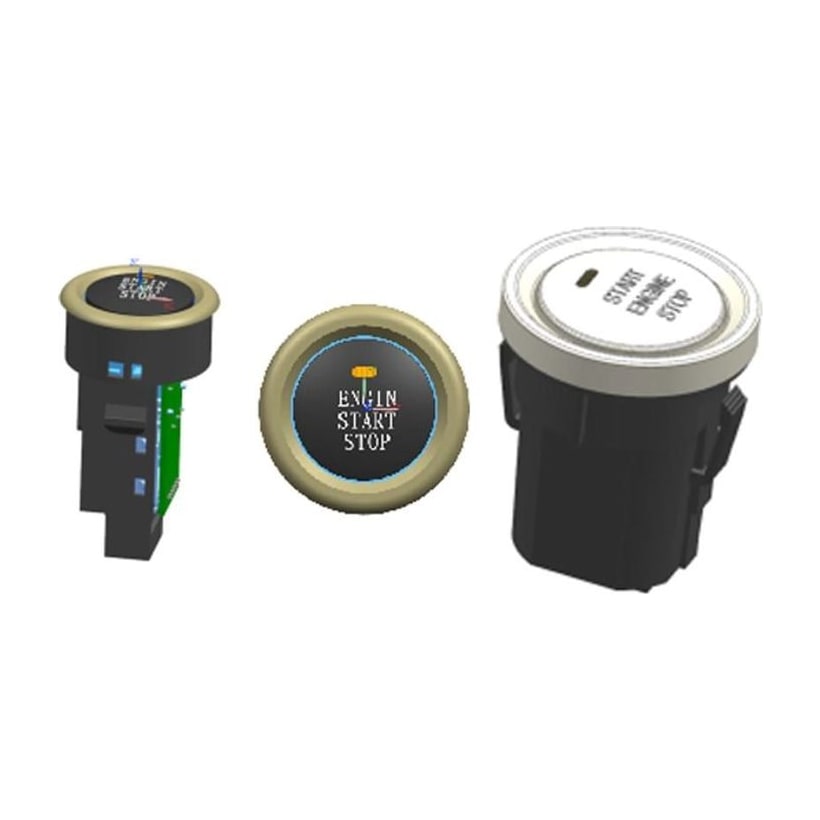
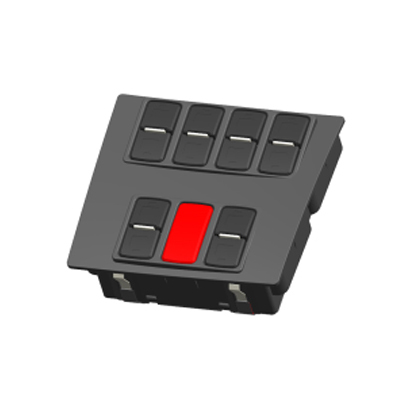
This is the range selector. The EDK-2213 is the separate parking-brake and Auto Hold switch. The TDK-902 / TDK-905 start button is the in-cab start control; this selector reads ignition as its ON input. Where the cab needs many labelled functions on a bus, that is the EDK-907 CAN switch panel, which is a different part from this hard-wired selector.
Manufacturing
Built under IATF 16949 with APQP planning, and a PPAP package is available for OEM programmes. End-of-line testing follows the programme control plan. Further environmental qualification is agreed per programme, with certified EMC testing at accredited third-party laboratories when the programme requires it.
Common questions
What positions are on the EDK-916? The dial is marked R, N, D and S. Each step is 35° ± 2°, and the operating torque is 0.15 N·m ± 0.05 N·m.
How does the N-position lock work? Rotating into N while the brake input is inactive locks the N solenoid. The solenoid releases only when the ignition (ON) input and the brake input are both active. If either input drops and the selector is still in N, the solenoid locks again. If the selector has left N, the solenoid stays released. In N, the power-off N output on pin 2 is active low; in every other position that output is off.
Is the gear signal on CAN, LIN or discrete wires? Discrete wires. R, N, D and S each have an active-low output on the harness connector TE 174045-2: SW2 is R, SW3 is N, SW4 is D and SW1 is S. Brake, ignition, backlight and the 12 V supply share that 12-way connector. The pin table on this page is the published assignment.
Is it a 12 V or 24 V part? The published rating is 12 VDC. Operating temperature is −40 to +85 °C, storage is −40 to +90 °C, and the mechanism is rated for 300,000 cycles.
What do you need to quote the EDK-916? The figures on this page are 12 VDC, positions R / N / D / S, and connector TE 174045-2. Send the panel drawing, how your controller reads the four gear outputs and the brake and ignition inputs, the legend you want beside S, and the expected annual volume.
How to ask
Use the contact page and attach the panel drawing; drawings welcome.