What EDSS is, and where this unit fits
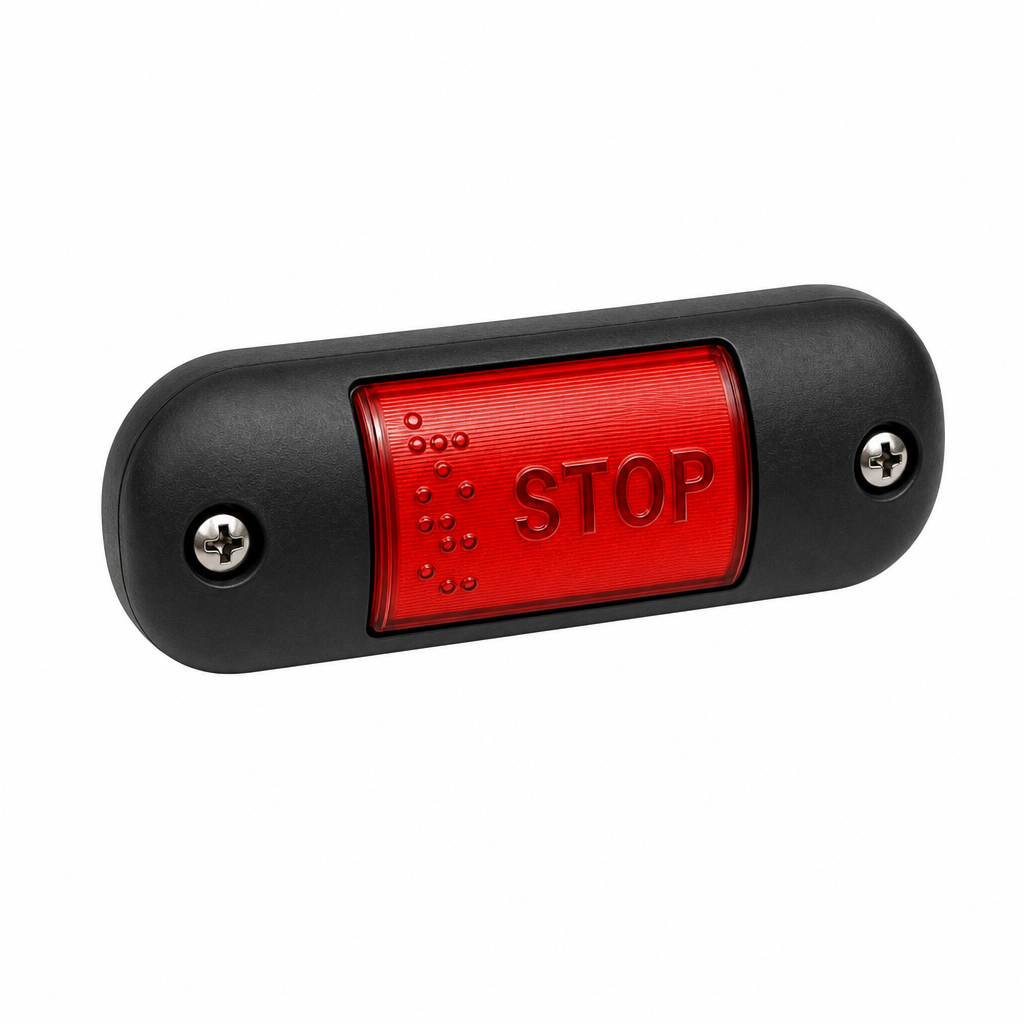
EDSS — Emergency Driving Stop System — is a bus safety function fitted on city buses and coaches on programmes where an EDSS or an equivalent driver-incapacitation stop is required. Its purpose is simple: if the driver suddenly cannot drive, or another emergency occurs, the vehicle should be brought to a controlled stop rather than left uncontrolled. The TDK-2419 is the occupant-facing part of that system — the emergency-stop button people press, and the indicator that shows its state.
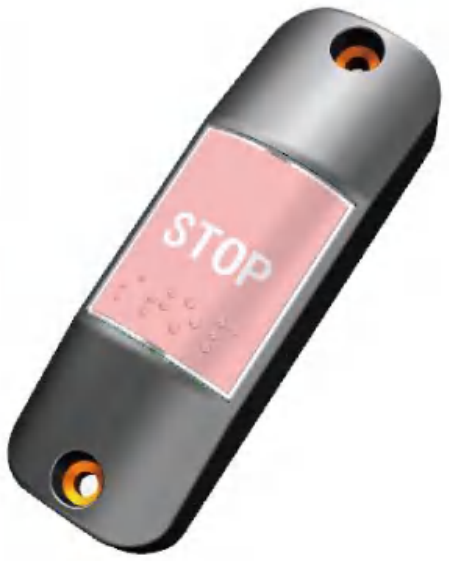
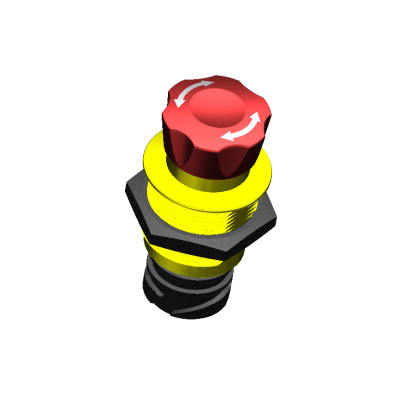
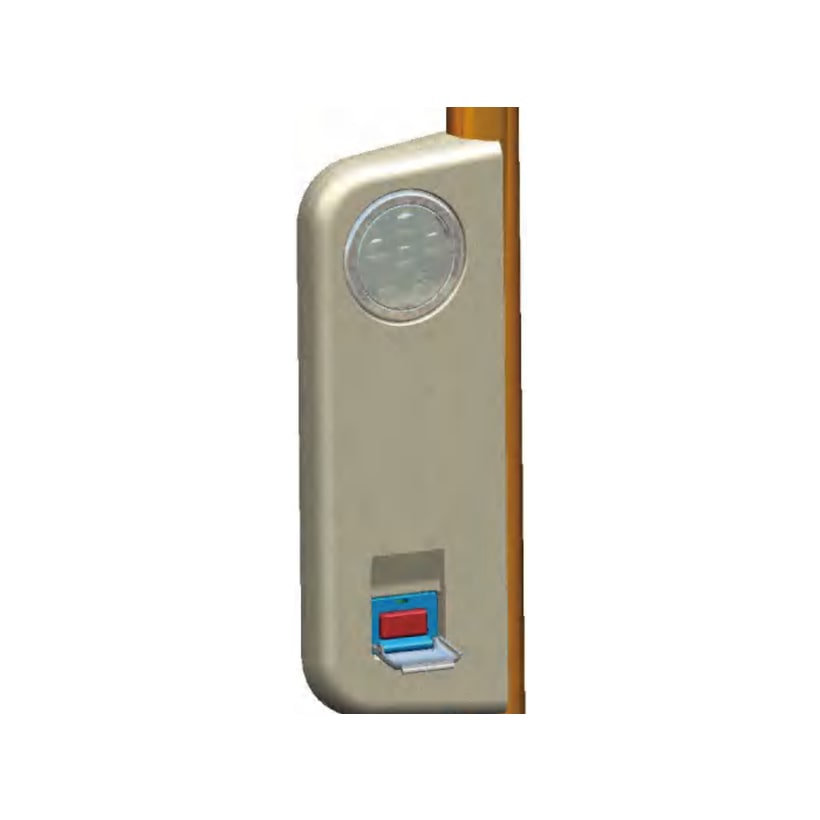
Because it is an emergency control, it is kept distinct from ordinary cabin buttons. On this unit the button sits under a protective cover so it is not pressed by accident, with the indicator alongside it. How many units a vehicle carries, and where they are mounted, is set per programme.
Who can trigger it — and what actually stops the bus
A bus EDSS is designed so a stop can be called from more than one place — commonly the driver's position and one or more points in the saloon. Whichever unit is pressed raises the same request. What happens next belongs to the vehicle: its EDSS control receives the request and carries out the stop. How that stop is performed — the deceleration profile, any hazard signalling, any rear warning lamp for following traffic — is defined by the vehicle and its controller, not by this unit. The TDK-2419's job is to capture the request reliably and reflect the system state through its indicator.
The status and warning indicator
An emergency function is only useful if its state is visible. The TDK-2419 carries a status / warning indicator on the unit, so the driver and occupants can read the EDSS state. The indicator colours and states are defined with the vehicle builder, because they have to match the rest of the cluster and the regulatory expectations for the market.
Stop-request and emergency stop are not the same button
Two controls look alike and must not be confused. A stop-request button — such as our JDK-2306 wired stop-request button or the TDK-2406 / 2407 wireless stop-request button — is a service control: a passenger asks the driver to stop at the next stop. An EDSS trigger is a safety control that calls for a controlled stop of the vehicle itself. They share a pushbutton form factor, which is exactly why they must be specified, marked and wired separately. The TDK-2419 is the emergency-stop side of that pair; for the service side, the bus stop request button buyer guide walks through how a stop request reaches the driver.
Where it fits & what we confirm at RFQ
The TDK-2419 is quoted to your vehicle rather than sold as a fixed part, because the mounting position, the connector and the indicator behaviour differ between builders. It wires to the vehicle's EDSS control; the manual specifies a Sumitomo 6098-5310 connector, with the vehicle-side mating half and pinout confirmed per programme. It is built under IATF 16949 with APQP planning and a PPAP package available for OEM programmes; because an EDSS trigger is a safety control, its behaviour and wiring are agreed in the control plan for each programme, with environmental screening in our in-house lab and EMC testing at accredited third-party laboratories when a programme calls for it. A few things are settled at quotation:
- the vehicle's EDSS control it must wire to, and the interface it expects;
- the button marking and the protective-cover style you need;
- the indicator colours and states, and any rear warning lamp it must match;
- the system voltage, and the protection rating for the mounting position;
- the connector, the panel cut-out, and expected annual volume.
Send the vehicle details and a drawing with your enquiry through the contact page, so the first sample can be built to the EDSS layout and controller you specify.
Common questions
What is EDSS, and what does the TDK-2419 do in it? EDSS — Emergency Driving Stop System — is a bus safety function that lets the driver, or a passenger, call for a controlled stop if the driver is incapacitated or there is an emergency. The TDK-2419 is the occupant-facing unit for it: an emergency-stop button plus a status / warning indicator. It sends the request and shows the state; the vehicle's EDSS control performs the actual stop. The unit does not brake the bus by itself.
Is the TDK-2419 a single unit or the whole EDSS system? It is a single unit — one emergency-stop button under a protective cover plus a status / warning indicator, mounted together, typically on a saloon pillar. A full bus EDSS also has the vehicle's EDSS control that actually stops the bus, and usually more than one trigger point. How many units, where they go and which controller runs the logic is defined per programme.
How is this different from a stop-request button? A stop-request button — like our JDK-2306 or the wireless TDK-2406 / 2407 — asks the driver to stop at the next stop, a normal service request. EDSS is an emergency function: it calls for a controlled stop of the vehicle itself. They share a pushbutton form factor, which is exactly why they are specified, marked and wired separately.
What connector and mounting does it use? The manual specifies a Sumitomo 6098-5310 connector. Which side is on the unit versus the harness, the exact pinout, the panel cut-out and the mounting orientation are confirmed per programme against your vehicle, so please send a drawing with your enquiry.
What do you need to quote the TDK-2419? The vehicle's EDSS control it must wire to, the button marking and indicator colours / states you need, the system voltage and protection rating, the mounting position and connector, and expected annual volume. Drawings welcome.