Overview
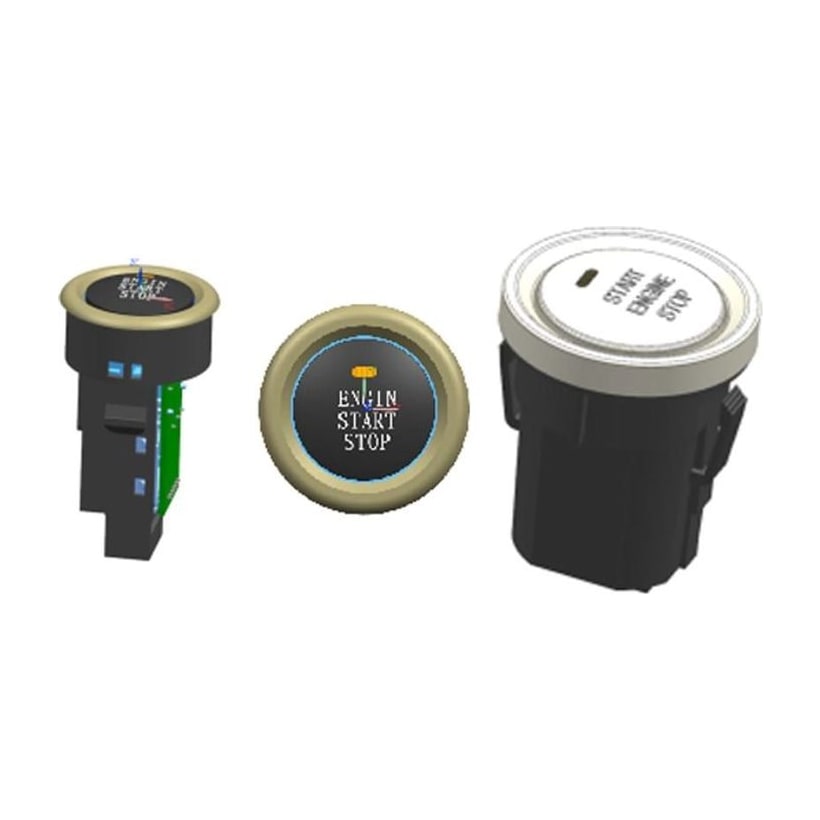
The TDK-902 and TDK-905 are the “ENGINE START STOP” push buttons a driver presses to start or stop the vehicle. They are round, panel-mounted momentary buttons that run on an 18–32 VDC (24 V) system, sit behind an IP53-rated face, and hold a −40 to +85 °C operating range with −40 to +90 °C storage.
Both belong to the same start-button family and share the button feel and the switch-signal interface. The difference is the job they are drawn for: the TDK-902 “one-touch engine start” button adds an immobiliser antenna coil so a transponder key can be read at the button, while the TDK-905 “one-touch start” button is the standard version with a higher rated cycle life and a smaller connector.
What the button does
A start-stop button is an input, not a power switch. Pressing it closes two switch-signal outputs — SSB_SW1 and SSB_SW2, each with its own ground return — that tell the vehicle’s start or PEPS controller a press has happened. The controller decides whether to crank, based on brake position, gear, immobiliser authorisation and the rest of its start logic. How the two outputs are used is defined by your controller and confirmed per programme.
The button also carries a backlight channel and two function-indicator channels, all driven by the vehicle so it can show ignition state (for example, off / accessory / ready) at the button. The 2.5 mm travel gives a defined press, and the graphic ring reads “ENGINE START STOP”.
The two models: immobiliser vs standard
Both models are the same idea — a lit engine start-stop button with two switch-signal outputs — but they are specified differently:
| Specification | TDK-902 (one-touch engine start) | TDK-905 (one-touch start) |
|---|---|---|
| Immobiliser interface | Yes — antenna coil + IMMO+ / IMMO− pins | No |
| Mating connector | AMP 2005496-1, 14-way | Molex 43025-1000, 10-way; interface matches 43045-1021 |
| Key force | 5 ± 1.5 N | 6 ± 1.5 N |
| Endurance | > 50,000 cycles | > 100,000 cycles |
| Illumination colour | White backlight + amber function light | Backlight & indicator colours customisable |
| Bezel / button | Ø44.4 mm bezel, Ø30 mm button | Ø41.7 mm bezel |
| Body depth | ≈ 78.7 mm (body height 59.6 mm) | ≈ 53.4 mm (body 39.5 mm) |
In practice: choose the TDK-902 when the start button itself must read the transponder key — a keyed anti-theft / immobiliser function built into the button. Choose the TDK-905 when the immobiliser lives elsewhere (or is not required) and you want the standard button, which carries the higher 100,000-cycle endurance rating and a compact 10-way connector.
Connector pinouts
Both buttons use the same signal set — a backlight (SSB_BL), two indicator LEDs (SSB_LED1 / SSB_LED2), two switch outputs (SSB_SW1 / SSB_SW2) with their grounds, and a main ground. The TDK-902 adds the two immobiliser pins. The published pinouts are below; the final harness assignment is confirmed at RFQ.
| Pin | Function | Rated | Max | Direction |
|---|---|---|---|---|
| A1 | Backlight (SSB_BL), orange lead | 50 mA | 100 mA | Input |
| A2 | Indicator LED 1 (SSB_LED1), red lead | 30 mA | 50 mA | Input |
| A3 | Indicator LED 2 (SSB_LED2), green lead | 30 mA | 50 mA | Input |
| A4 | Switch output 1 (SSB_SW1) | 50 mA | 100 mA | Output |
| A5 | Switch ground 1 (SSB_GND1) | 50 mA | 100 mA | Input |
| A6 | Switch output 2 (SSB_SW2) | 50 mA | 100 mA | Output |
| A7 | Switch ground 2 (SSB_GND2) | 50 mA | 100 mA | Input |
| A8 | Ground (GND) | 100 mA | 200 mA | Input |
| A9 | Not connected | NA | NA | NA |
| A10 | Not connected | NA | NA | NA |
| A11 | Not connected | |||
| A12 | Not connected | 100 mA | 200 mA | Input |
| A13 | Immobiliser + | NA | NA | NA |
| A14 | Immobiliser − | NA | NA | NA |
| Pin | Function | Rated | Max | Direction |
|---|---|---|---|---|
| A1 | Backlight (SSB_BL), orange lead | 50 mA | 100 mA | Input |
| A2 | Indicator LED 1 (SSB_LED1), red lead | 30 mA | 50 mA | Input |
| A3 | Indicator LED 2 (SSB_LED2), green lead | 30 mA | 50 mA | Input |
| A4 | Switch output 1 (SSB_SW1) | 50 mA | 100 mA | Output |
| A5 | Switch ground 1 (SSB_GND1) | 50 mA | 100 mA | Input |
| A6 | Switch output 2 (SSB_SW2) | 50 mA | 100 mA | Output |
| A7 | Switch ground 2 (SSB_GND2) | 50 mA | 100 mA | Input |
| A8 | Ground (GND) | 100 mA | 200 mA | Input |
| A9 | Not connected | NA | NA | NA |
| A10 | Not connected | NA | NA | NA |
The immobiliser interface on the TDK-902
The TDK-902 carries a copper induction coil around the button and brings out an IMMO+ / IMMO− pair on its connector. That coil is the immobiliser antenna: it lets the vehicle’s immobiliser read a transponder key held at the start button, so the key does not need a separate reader location. The immobiliser authorisation itself — matching the transponder and enabling the start — is performed by the vehicle’s controller; the button provides the antenna interface, not the anti-theft decision. If your programme already reads the key elsewhere (for example, at a PEPS controller), the TDK-905 without the coil is the simpler choice.
Feel, illumination & durability
Because a start button is pressed every trip, the tactile side is specified: a defined 2.5 mm travel with a 5 ± 1.5 N press on the TDK-902 and 6 ± 1.5 N on the TDK-905. Mechanical endurance is rated at > 50,000 operations for the TDK-902 and > 100,000 for the TDK-905. The TDK-902 ships with a white backlight and an amber function light; on the TDK-905 the backlight and indicator colours are customisable to match the cluster.
Where it fits in a keyless-start system
The start button is the driver’s input into a keyless-start or PEPS chain — it is not the controller. In a typical build:
- The TDK-902 / 905 button reports the press (and, on the TDK-902, reads the transponder at the button).
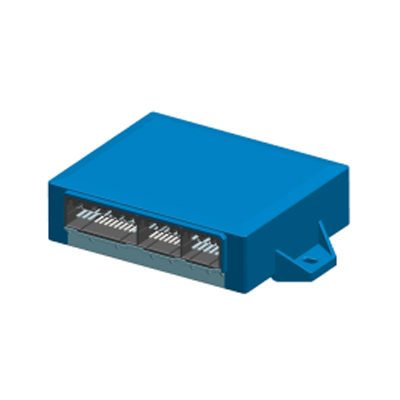
- A PEPS core controller (EBX-964) authorises the key, drives the LF antennas and commands push-button start.
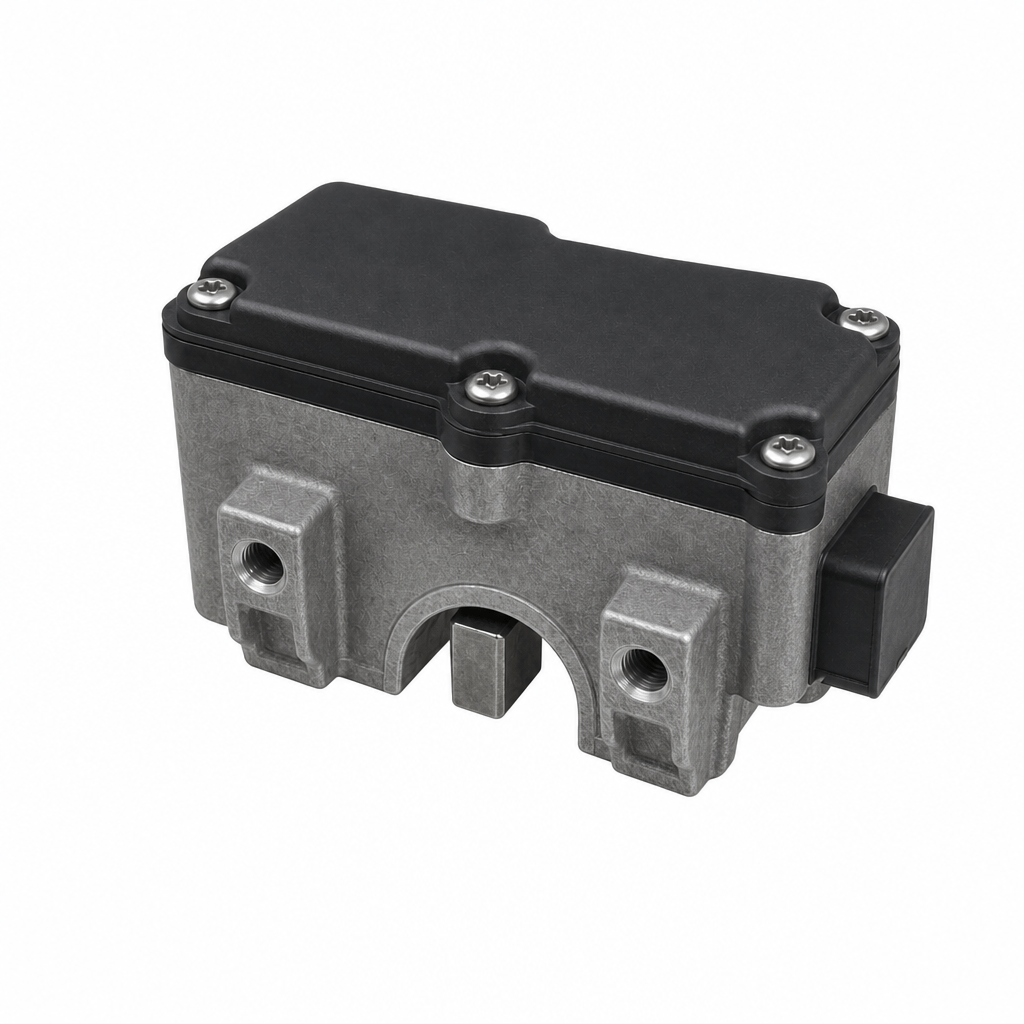
- An electronic steering-column lock (EDK-911) locks and unlocks the column on the same authorisation.
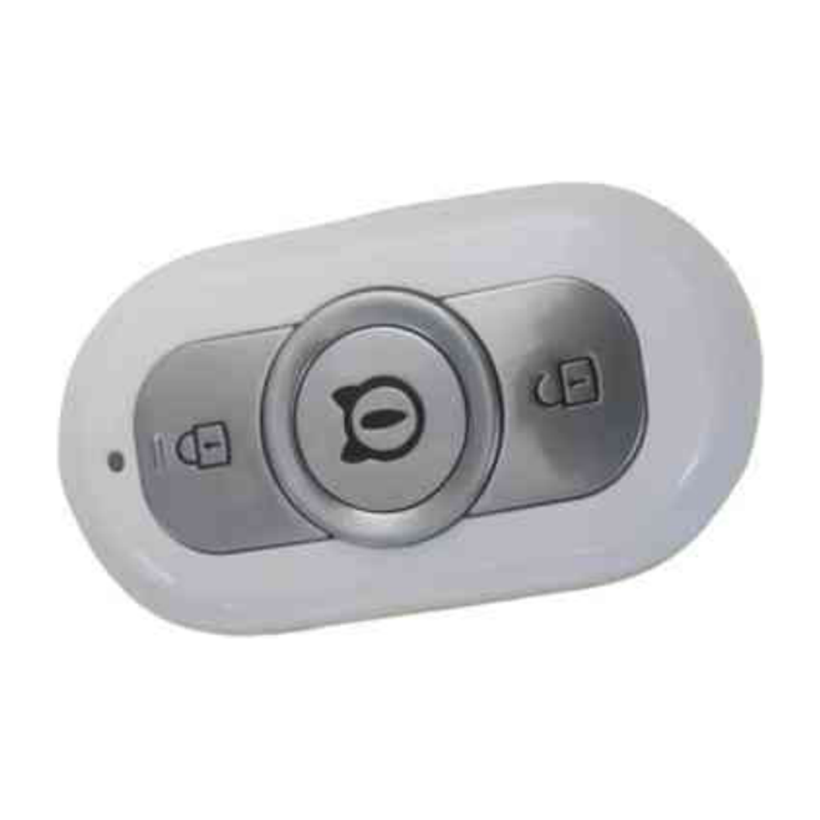
- A remote key fob (YDK-2401) adds one-way RKE remote lock / unlock. It is a button remote, not the two-way smart-key a full passive-entry (PKE / PEPS) build uses — whether a transponder credential is carried is confirmed per programme.
For how passive entry and push-button start fit together — RKE vs PKE vs PEPS, and integrated vs dedicated controllers — see the PEPS keyless-entry module guide. This button is a distinct function from the EDK-916 gear selector (which reports R, N, D or S on its own outputs) and the column-lock actuator. The button and the column lock each send their own request; the selector reports position on its own wires.
Manufacturing & testing
Built under IATF 16949 with APQP project planning and a PPAP package available for OEM programmes. End-of-line testing follows the programme’s control plan — typically switch-output continuity, illumination and actuation force — while endurance, temperature soak and, on the TDK-902, the immobiliser-coil interface are validated on a sample basis in our in-house lab when a programme calls for fresh qualification.
Common questions from buyers
Does the button start the engine directly? No. It is a momentary input. The controller runs the start logic (brake, gear, immobiliser) and drives the starter.
What is the difference between the TDK-902 and the TDK-905? The TDK-902 integrates an immobiliser antenna coil and brings out IMMO+/IMMO− pins on a 14-way AMP connector (5 ± 1.5 N, > 50,000 cycles). The TDK-905 has no immobiliser coil, uses a 10-way Molex mating housing, and is rated to a higher > 100,000-cycle life (6 ± 1.5 N). Supply voltage, working temperature, voltage drop, travel and the two switch outputs are shared.
Why two switch outputs? The pinout brings out SSB_SW1 and SSB_SW2, each with its own ground. How the two outputs are used is defined by your controller and confirmed per programme.
What connector and mating part do I need? The TDK-902 mates with an AMP 2005496-1 (14-way). On the TDK-905 the interface matches Molex 43045-1021 and the mating housing is 43025-1000 (10-way). Both pinouts are shown above; send your harness plan and we confirm the final assignment.
Is it sealed for an exposed mounting? The face is rated IP53. For a wash-down or more exposed position, tell us the mounting and we will confirm what sealing level the programme can support.
How to ask
The TDK-902 / 905 belongs to the Switches & Sensors family. Tell us which model you need (immobiliser or standard), the target vehicle programme, the system voltage and the immobiliser / PEPS controller you are pairing with — and we will confirm the harness assignment, the illumination scheme and the immobiliser interface. Use the contact page; drawings welcome.